Friday, February 13, 2009

The Open Boat


Sing Ruby Siu
English 48B
February 13, 2009
Journal #12 Stephen Crane


QUOTE:

“In the wan light, the faces of the men must have been gray. Their eyes must have glinted in strange ways as they gazed steadily astern” (1001).

SUMMARY:
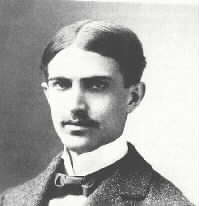
In Stephen Crane’s The Open Boat, he wrote a story about the four men, the captain, the cook, the correspondent and the oiler, who were forced to wander in the sea on a small dingey after a shipwreck. This story is based on Crane’s first-hand experience of The Commodore. Arranging himself in the role of the correspondent, Crane depicts the disastrous experience in a third-person viewpoint. In this particular quote, Crane on the literal surface is describing the gray tone on the men’s expression – gazing deadly. However, what he is really referring to is the inner, psychological fear each man went through during their rowing in the sea.

RESPONSE:
“Stephen Crane’s The Open Boat is not a story about four shipwrecked men, but the relationship between man, nature, and fate” (Wikipedia). However, I think there are far more themes needed to be explored in the text. For example in the above quote, I see the subtle theme of the fear of death. The fear I am talking about here is not the nominal one every one might have jokingly talked about it somehow. The fear of death experienced by these men is the slow, realiz
able and irreversible fundamental terror. It is until they reached such a decisive moment, when they had no choice other than gambling their life in the sea, they were finally completely overwhelmed and disturbed by the big questions of life and death.

The correspondent even, in retrospect, remembered how he had felt indifferent to other’s death before. He “had never considered it his affair that a soldier of the Legion lay dying in Algiers, nor had it appeared to him as a matter for sorrow” (1012). This shows that in an earlier period, before the shipwreck, the correspondent did not see death as a matter to himself. However, when his own life was in hand of the unpredictable and powerful waves, he suddenly felt submitted to the natural force, and, felt obviously hopeless. The fear of death penetrated all his body and his comrades’, yet no one mentions these deep thought. At first, these men tried to fool each other and themselves by generating fake silence and optimism. These men attempted to remain calm and logical, especially the captain, who tried his very best to coordinate his crew in the best way. They hope by doing this, everyone will gain faith and confidence in their group future. However, they could not help putting a similarly “gray” face, which signifies their hopelessness, anxiety and fear.

The fear of death made me relate to Ernest Hemingway’s Nick Adams Stories, in which young Nick first encountered the fear of death early during his days of hunting with his father, and the stay in Indian camp. Later, Nick was also exposed to more deaths during his services as an American soldier in Italian Army. I see both stories are describing the process of consolidating fear of death, so as to honestly outline the human psyche under certain circumstances.

Thursday, February 12, 2009

Maggie


Sing Ruby Siu
English 48B
February 12, 2009
Journal #11 Stephen Crane

QUOTE:

“The girl, Maggie, blossomed in a mud puddle. She grew to be a most rare and wonderful production of a tenement district, a pretty girl” (967).

SUMMARY:

In Maggie, Ch. V, the little girl, who dragged her little brother around, has grown into a young girl. Living all her life in the chaotic Rum Alley, she grew up in a district with serious violence, brutality and poverty. After the death of her little tot brother, the only family members who were beside her were her drunken mother, weak father and her brother Jimmie, who consistently engaged himself in fights due to pride. Lived and being perceived as one of those uneducated kids, she surprisingly turned out to be a pretty girl.

RESPONSE:

Crane's first novel is the tale of a pretty young slum girl driven to brutal excesses by poverty and loneliness” (Online-literature.com). The fall of Maggie was the central focus of the story because Crane wants to emphasize that even a girl as good as Maggie can be severely influenced by the environment. In the above quote, the use of the verb, “blossomed,” signified the fact that Maggie was originally born as pretty as flowers. The symbolic meanings of flowers implied on Maggie include beauty, sexy, allure and value. However, this very flower blossomed in a “mud puddle,” which symbolically refers to the terrible, vulgar and complicated area in which Maggie lived. The big contrast in this very short sentence summarizes the theme behind the story, which is: no matter the quality of a person, environment will act on as a gigantic assimilating force acted on a person’s character development and acts.

To a broader extent, every figure represents the failure of Irish immigrants in every aspect. Everyone in the story mistakenly came to America with their “American Dream” but they were all driven to some unfavorable or unfortunate extremity in the book. For example, in the opening of the story, we can see how Jimmie was obsessed in fights and pride gained from victory. He represents a number of Irish youths who instead of studying positively, wrongly devoted their energy and focuses into some bloody, brutal gangster businesses. Pete, the bartender, who represents a medium between low-class and middle-high class Americans at that time. He, however, clang onto the margin of middle-high class life by proactively and professionally networking with people and he many times omitted his real needs and desires-his love for pure and innocent girls, like Maggie. People just like Pete competed for the best by all means to assimilate well into the society and yet they might live in pains that were even unnoticed by them.

Jimmie and Maggie’s mother, Mary, represents an irresponsible, jobless and uneducated parent who does not know how to care for her children and herself. Sunk in the sea of alcohol, Mary can be consciously escaping from the reality of unemployment, disgraceful children and useless husband. In the story, we can see she indulged herself by drinking and always acted furiously. This might also be a way for her to release her anger and sentiment toward her life and environment. Showing no special effort to communicate with her children, she still claimed that she had done all the best things a parent could do to teach Maggie. This shows either she really does not attain sufficient knowledge in parental care, or she obviously tries to sooth her own emotion by formulating some lies. In the process of lying, she successfully shrugged off her responsibility to her daughter or Pete, so that she would become free and sinless again.

Maggie was the last one who was assimilated into this terrible surrounding. Crane portraits the change of her personality primarily based her thoughts and affection toward Pete. Crane wants to let the readers understand not only the existence of the slumps at that time, but to face the painful and inevitable transition of these people into slumps.

Friday, February 6, 2009

The Squatter and The Don


Sing Ruby Siu
English 48B
February 6, 2009
Journal #10 Maria Amparo Ruiz De Burton

QUOTE:
“And by a sad subversion of purposes, all th
e private land titles became unsettled. It ought to have been said, ‘An Act to unsettle land titles, and to upset the rights of the Spanish population of the State of California” (93).

SUMMARY:

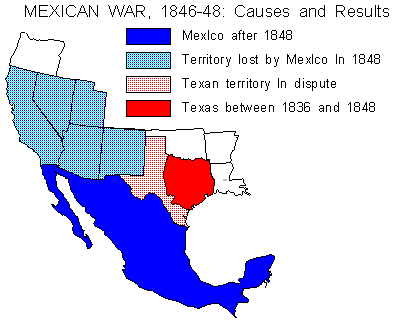
From the background of the story, Don Mariano represents a wealthy Spanish landowner who loses his authority over his own land after Mexican War and the Land Act. The author, Ruiz de Burton, in the first place states her own synopsis of Charles Dickens’ quote, and then she relates the English law to the American law. Then, she bitterly and sarcastically points out that the Treaty of Guadalupe Hidalgo and the Land Act were distorted from their original values, which were to settle the private land claims, into some contradictory purposes that was beneficial to the U.S. only.

RESPONSE:

According to one of the reviews online, someone mentions that “The Squatter and the Don was written to appeal to a wide audience of people, no matter their color, class, or ethnicity” (megaessay.com). This is true because the story has a storyline, symbolic values, underline moral and even historical implications. Therefore, it is interesting to see how Ruiz de Burton changes her tone to suit different audiences and to solidify her thesis. In the introduction of the chapter, Ruiz de Burton purposefully opens her line by quoting Charles Dickens’ quote. I believe this descent of Spanish wished to prove her knowledge in the white’s literature so as to establish a bond with the white readers. Therefore, she quoted an Englishman’s famous saying in the opening. At the same time, this quote is very juicy as she uses it not only to build connection with the reader, but also to rebuke the U.S. government’s selfish aims to expand national territory by literally “changing” laws and neglecting justice to force Spanish descents to give up their lands. Ruiz de Burton at this point acted like an objective third-party critically analyzing the deeds of U.S. government because she does not insert any personal opinions or anecdotes up to this point.

Then, she begins to continue depict the story happens in John Gasbang’s rancho. She transits her objective viewpoints into a personal experience that happens to Don Mariano. She introduced Don Mariano as someone who has experienced the humanitarian treatment of the government but now “had found a cruel stepmother” (93). By this, she reveals a little opinion about how the Spanish-Mexicans just like her felt about the “stepmother”—the United States. In the rest of the chapters, I believe Ruiz de Burton makes Don her speaker, which means that the conversation between Don and the settlers (Squatters) actually reflects her values and actions. The second step Ruiz de Burton would like to take is to establish a gentle, polite, friendly and humble character of her people through Don’s personality. For example, Don addresses the “squatters” the “gentlemen” and compliments them for being “very kind” (95). He even excused his foreign accents in English and helped conceal the wrongdoings of the settlers. Ruiz de Burton at this point is very polite to Americans who read her book with a tender heart, but she is very sarcastic to those American squatters who are doing the same to the Spanish-Mexican people.

It is even more apparent at the end when the Clarence admitted that “ ‘So it would be wiser to make laws to suit this country, and not expect that the country will change its character to suit absurd laws” (100). Ruiz de Burton at this point has officially finished the proposing part of Don, and therefore it comes to a point that Anglo settlers are the ones to consider about the offer. This saying of Clarence reminds readers the theory of Charles Dickens: Americans would love to make laws in favor of their own place, politics or interest. And in this case, Clarence on behalf of the Americans admits this and utters it on his own. Therefore, I believe Ruiz de Burton has successfully proved and reinforced the opening quote by the story of Don. More importantly, it is not she who restates the theory, but the American himself.

Thursday, February 5, 2009

A White Heron


Sing Ruby Siu
English 48B
February 5, 2009
Journal #9 Sarah Orne Jewett

QUOTE:

“No, she must keep silence! What is it that suddenly forbids her and makes her dumb? Has she been nine years growing and now, when the great world for the first time puts out a hand to her, must she thrust it aside for a bird’s sake?” (528).


SUMMARY:

In the story, “A White Heron,” a stranger appeared in Sylvia’s grandmother’s farm and he seemed to be a hunter and collector of birds. The man narrated his passion for birds, especially for white herons, and he was even willing to give away some money to get this bird. Sylvia was first impressed by how dedicated, modernized and knowledgeable this young man was, so she in her mind accepted this trade and tried to help catch the white herons. However, in the very last section of the story, she apparently at that time had a conflicting mind about whether to trade a white heron for money or to preserve the lives of the birds. This quote summarizes how Sylvia insisted on her unknown motivation to reject the stranger’s quest.

RESPONSE:

I think this quote is one of the richest, densest and most delicious quotes from the story. The objects in this quote are referring to actual subjects, but a certain amount of vagueness grants us imaginative space and critical thinking that we are able to relate to some symbolic ideas behind. It reveals multi-cores of the story if we interpret it in several critical ways, such as from eco, feminist, social-economical and sexist perspectives. On the most apparent level, which is the perspective of eco-criticism, Sylvia wanted to preserve the nature and the wilderness because “the power of nature proved to be much greater for her” (Wikipedia). This means that the money or the “great world” offered by the man was no longer important to her compared to her unbreakable dedication and promise for the nature. In her little heart, her innocence and love for nature could not afford a fatal betrayal for the sake of money, and therefore she chose to stand by the birds’ side.

The feminist approach shown by this quote is the part I believe to be the most intriguing and interesting symbolism. Around the turn of the twentieth century, women were often suppressed and were not allowed to deliver opinions publicly. Many of them, like the characters in “The Yellow Wall-paper” by Charlotte Perkins Gilman were imprisoned in cells and treated as psychological abnormal beings. Being held the ability to talk and move freely, Sylvia and many of the females in this story led a independent and self-sustaining image. For example, Sylvia’s grandmother operated the farm mostly by herself; little Sylvia was useful and able to help graze the cow; even the cow Mistress Moolly had great economical contribution to the farm when she gave milk. The absence of male figures and the success (not measured by richness) demonstrated the abilities of girls and women.

In this very quote, Sylvia “must keep silence” showed an autonomous and subjective decision of keeping silence, which contrasted greatly with the women who were forced to keep silent. Although her thoughts urge us to think “what is it that suddenly forbids her and makes her dumb,” she gave no answer, or the only possible answer that forbids her would be her willingness to preserve the nature. In other words, in the feminist approach, Jewett sarcastically used the word “forbid” to refer to how the suppressed women were forbidden to speak, and to imply she was not one of them. The term “great world” is also used to describe the economical opportunities given by male figures, such as marriages. It turns out the “great world” wasn’t that “great” for Sylvia, whose heart endorsed the great nature the most. Jewett implies that despite the opportunities offered by men, females could also choose to keep the original purity, ability and perseverance of themselves, which is the white heron.